
Cognitive activities for preschoolers are playful and engaging experiences that help children learn, think, and solve problems. These activities stimulate brain development and support early learning in areas like memory, attention, language, and reasoning.
Simple, everyday interactions like solving puzzles, singing songs, and playing memory games can have a powerful and positive impact on your child’s development. Below, we highlight a few fun and effective cognitive development activities for preschoolers that you can do at home or in the classroom.
Why is Cognitive Development Important?
During preschool, a child’s brain is rapidly developing, and the more opportunities children have to think and explore, the better! Simple, everyday activities and interactions that focus on “brain work” are vital to a child’s cognitive development. Cognitive development refers specifically to the ability to learn, thin
k, and problem solve. For a little activity inspiration, we’ve outlined simple suggestions that will have an enormous and positive impact on your preschooler’s developing mind.
Cognitive Development Activities for Preschoolers
No faltan opciones de actividades cognitivas para preescolares. Las actividades basadas en el juego, la exploración, la lectura, el canto y las preguntas abiertas refuerzan las habilidades matemáticas y científicas del niño, aumentan su curiosidad y reconocimiento, fortalecen funciones ejecutivas como la atención y el razonamiento, y le ayudan a entender cómo encaja en el mundo. Por no hablar de que, cuando trabajan juntos en habilidades de forma significativa, también profundizan en los vínculos entre usted y su hijo o sus alumnos.
Actividades del juego de memoria
Los juegos de memoria son una forma estupenda de fomentar la memoria, la concentración y la atención de los niños en edad preescolar. La naturaleza lúdica de estos juegos nunca delatará el hecho de que los niños están aprendiendo mucho mientras se divierten. Puedes crear sencillos juegos de memoria con unos pocos objetos de la clase o del hogar:
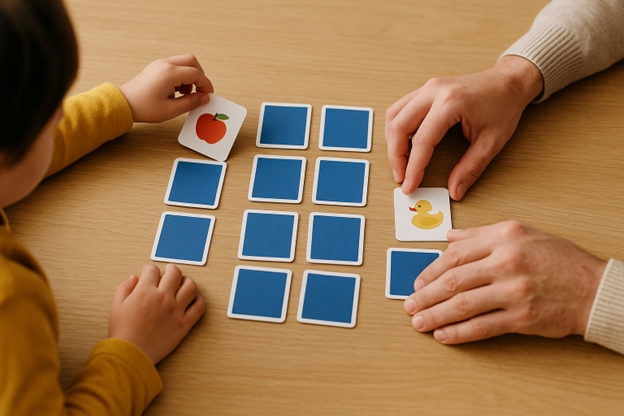
Matching card games:
- Grab a deck of cards and spread them on a flat surface, face down.
- Create the rules of the game together, are you going to find matching colors, numbers, or pictures?
- Let children take turns choosing any two cards to look for a match, like two queens.
- Take turns going back and forth.
- The act of creating a rule and searching for the match relies on children remembering where they have seen each picture in previous turns.
Magic cup game:
- Get three cups or bowls and one small rubber ball or any other small item that you’d like.
- Place the ball or item under one cup, allowing the child to see which cup the ball is under.
- Scramble the cups around.
- Ask the child to point to the cup with the item. Did they find it? Great! If not, that’s great too!
- Start from the beginning and keep going. Offer lots of positive encouragement.
- You can also choose three different color cups, or bowls or other variable to help simplify the game.
Puzzles
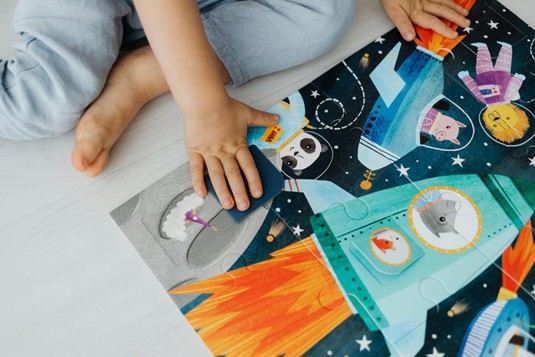
Los puzzles, en toda su variedad, son una actividad excelente para ayudar a fomentar habilidades y capacidades esenciales como:
- Memoria
- Motricidad fina
- Conciencia espacial
- Resolución de problemas
- Diferenciación entre patrones, formas e imágenes
- Razonamiento lógico
Ya sea en clase o en casa, ponga los puzzles a disposición de los niños para que jueguen libremente o para que pasen un rato estructurado a lo largo del día. Puedes sentarte con los niños y reforzar su vocabulario y su capacidad para resolver problemas de forma lógica trabajando juntos en un puzzle. Otra opción, quizá cuando estés fuera de casa, es sumergirte en rompecabezas visuales con rompecabezas en línea para preescolares.
Cantar, rimar y jugar con los dedos

Todo el mundo sabe que una canción con rima hace pasar muy buenos ratos. Los cuentos y las canciones rimadas desarrollan las capacidades cognitivas de los niños introduciendo y ampliando las reglas del lenguaje, reforzando la concentración, ampliando el vocabulario e incluso la confianza en sí mismos. Si se añaden acciones de juego con los dedos, también se ayuda a potenciar la memoria y las la memoria y la motricidad.. Reúnanse y elijan una canción para cantar juntos:
- "Canción del abecedario Permite a los niños recordar el abecedario
- "Cabeza y hombros": Ayuda a los niños a seguir instrucciones
- La araña Itsy Bitsy: Construye la memoria
Si tienes tiempo extra, incluso puedes intentar una Crea tu propia guitarra para acompañar tus canciones y contribuir al desarrollo de tu hijo.
Sorting and Matching Activities
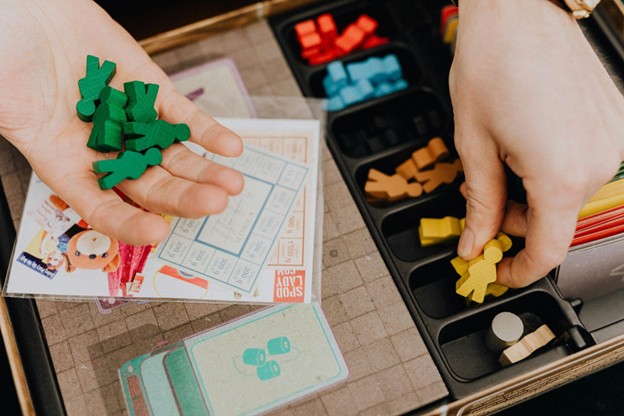
Simple sorting games are a fun way to help preschoolers practice observation and comparison skills. Whether at home or in the classroom, try offering a mix of small toys, buttons, or blocks, and encourage your child to group them by color, shape, or size.
You might ask:
- “Can you find all the red ones?”
- “Which ones are circles?”
- “Can you sort these from smallest to biggest?”
Asking questions while your child sorts helps strengthen vocabulary, critical thinking, and reasoning.
Pretend and Play Make-Believe
Imaginative play is one of the most natural (and enjoyable!) ways for young children to build cognitive skills. Whether they’re pretending to cook dinner, take care of a stuffed animal, or play school, they’re learning how to plan, organize ideas, and explore cause and effect.
Let your child take the lead. You can join in by asking, “What happens next?” or “Who are we today?” These little prompts support storytelling and problem-solving while encouraging creativity and confidence.
Everyday Counting Games
Counting can happen anytime, not just during math time. Invite your preschooler to count how many grapes are on their plate, how many blocks are stacked, or how many steps it takes to get to the door.
This kind of everyday math builds number recognition and one-to-one correspondence (one number per item counted). To stretch their thinking, you can add in simple questions like:
- “What if we eat one? How many are left?”
- “Can you give me two more?”
These activities turn daily routines into learning moments while building strong early math foundations.
Recursos adicionales
QSSB es un recurso tanto para padres como para cuidadores, con actividades, información y apoyo comunitario para ayudar a los niños a crecer y desarrollarse durante los primeros 5 años. Busque aquí recursos para padres/cuidadores y proveedores de servicios para la primera infancia para obtener más información sobre el desarrollo y la adquisición de habilidades.